
How a Small Venue Turns Attention Into Action
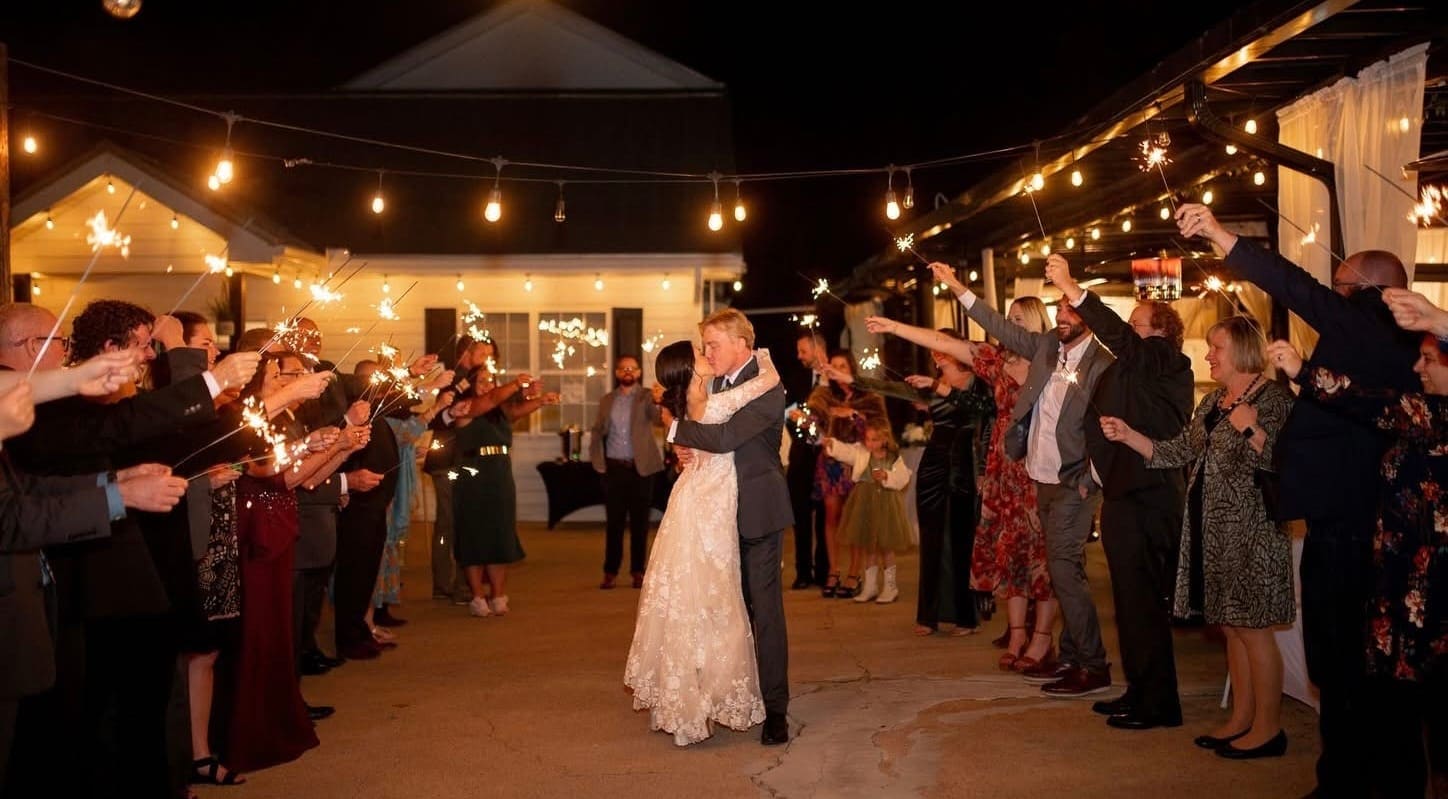
If you're a bride, this article is written for our network of venue owners. We are talking to the people behind the venue website, not asking you to become a marketing analyst while you plan your wedding. If you are looking for planning help, start with our private tour page, published pricing, or real photos of the estate. This conversation is for the owners who make those pages possible.
Josh and Meika run Scarborough House as a local mom-and-pop business. We are not a national hotel brand with a giant marketing department. We are a family-run private estate wedding venue in Stantonsburg, near Wilson, North Carolina, and every decision has to earn its place in the budget and on the calendar.
That is why marketing is not decoration for us. It is part of staying in business. The best product in the world will not sell if no one knows it exists. A beautiful venue can still be invisible. A useful page can still be skipped. A thoughtful offer can still sit unopened if the first sentence does not give the right person a reason to continue.
CTR is the first step, not the whole goal
Click-through rate, or CTR, tells us whether a headline, search result, social post, or email earned the next moment of attention. It does not tell us whether the visitor was the right person, whether the page kept its promise, or whether a qualified couple eventually requested a tour.
We need to watch the whole path. Did someone see the result? Did they click? Did they find a clear answer? Did they move to a planning or pricing page? Did they request a tour or start a useful conversation? A clever line that attracts the wrong audience is not a victory. The best hook earns a qualified next step and makes the page more useful after the click.
That is the part of a hook-testing framework I found interesting. The speaker described five patterns that repeatedly performed better than generic openings. We are adding those patterns to our editorial process as a set of hypotheses. We are not treating them as magic words, and we are not claiming that a video proves what will work for every venue.
Five patterns worth testing on venue pages
1. Pattern recognition
This starts with a repeated observation. It works because the reader recognizes the situation and wants to know what they may be missing.
For a venue owner, that might become: “After walking couples through venue decisions, I keep seeing the same lodging mistake.” The body then has to name the mistake and explain the practical fix. If we do not have a real repeated observation, we should not invent a number to make it sound more scientific.
2. Reality check
This pattern replaces a popular explanation with a more useful one. “It is not that your venue has nothing to say. Your page may be making visitors work too hard to find the answer.”
This is especially useful for small businesses because the first diagnosis is often “we need more content.” Sometimes we do. Sometimes the stronger move is to make the existing answer easier to see. A visitor may not need another post about the property. They may need the price, guest capacity, lodging details, or tour action to be clear without hunting.
3. Evidence
Evidence hooks lead with a result and the context that produced it. This can be powerful, but it is also the easiest pattern to misuse. We should never invent a conversion rate, revenue number, traffic result, or customer count to make a headline more clickable.
When the result is documented, say what happened and what made the difference. When the result is not documented yet, call it an experiment. “We are testing a clearer tour path on our venue pages. Here is what we will measure before we call it a success.” That is less flashy than a made-up percentage, but it gives other owners something they can trust.
4. Misconception flip
This pattern challenges an assumption the audience may already hold. “You think your venue needs more posts. You may actually need clearer answers on the pages you already have.”
The flip only works when the article explains the replacement idea. Otherwise, it is just contrarian packaging. For us, that means looking at the pages where a visitor makes a decision, not only the pages where we publish a story. Our pricing page, lodging page, and tour page have a more direct relationship to action than a headline alone.
5. Insight from observation
This begins with a specific moment. “A couple asked the same practical question three different ways, and it revealed something most venue websites miss.”
The value is not the drama of the moment. The value is the lesson. Maybe the information was technically on the site but hard to find. Maybe the answer changed depending on whether someone arrived from Instagram, Google, or a referral. An observation gives us a reason to improve the page around a real human question.
What the Japanese habits add to the process
Thinking about touring? Most couples know within the first ten minutes on the grounds. See tour times or check pricing first.
The seven habits from the same discussion are useful when we treat them as an operating system for marketing, not as words to sprinkle into a caption.
- Kaizen: make one small improvement to a title, opening, page path, or CTA and learn from it.
- Ikigai: begin with why the reader needs the answer, not with the internal name of the page.
- Hara Hachi Bu: remove extra claims and competing CTAs. A page can be complete without being crowded.
- Anchored focus: give one experiment a defined review block instead of changing everything at once.
- Seiri and Seiton: keep the content, links, metadata, and measurement notes organized so clutter does not become friction.
- Kintsugi: let a weak result teach us something about the promise, audience, or page experience.
- Wabi-sabi: publish a useful version, then improve it. Waiting for perfect copy can become another form of avoidance.
That discipline matters for a small venue. Josh and Meika cannot spend every day rewriting the homepage. We need a process that helps us decide what to change, why it matters, and what signal would tell us to keep or reverse the change.
How we will turn a click into a conversation
Our first question is whether the promise is clear enough to earn the click. Our second is whether the page keeps that promise quickly. A visitor who clicks a title about wedding weekend lodging should not have to decode a beautiful paragraph before finding the bedroom count or the next step.
Our third question is whether the action is appropriate for the reader. A venue owner reading Tech Talk may want the reasoning behind a page decision. A couple may want to see the estate, understand the weekend, or ask whether the date is possible. The content lanes should stay separate even when the underlying lesson is related.
We can also learn from our local network. Scarborough House has previously linked to SpringHaus Farm because locally owned venues do not have to pretend that every other venue is a competitor. When a useful idea, vendor, or venue deserves attention, sending a good visitor somewhere helpful can strengthen trust rather than weaken it.
For measurement, we will look at impressions, clicks, CTR, average position, meaningful page engagement, clicks into planning pages, and qualified tour actions. Search Console can help us understand search behavior. First-party analytics can help us understand the path after the click. Neither tool replaces judgment, and neither gives us permission to claim a win before the business result is visible.
The conversation we want with other venue owners
The practical question is not “What is the perfect hook?” It is “What promise would make the right person stop, and can we keep that promise once they arrive?”
For some venues, the answer may be a pricing page that stops hiding the number. For another, it may be a lodging guide that answers the questions guests ask every weekend. For us, it may be a better connection between a local story, the real experience of a private estate, and the simple next step of planning a tour.
We are going to use the five hook families in our content calendar, label the primary pattern, and keep the test bounded. We will not call every increase a breakthrough. We will not confuse attention with trust. We will keep the writing specific, useful, and grounded in what we actually know.
If you run a venue, we would be interested in the pattern you keep seeing. Which questions do visitors ask before they book? Which page earns attention but fails to move people forward? That is the conversation worth having, because better marketing is not about shouting louder. It is about helping the right person recognize that the answer they need is here.