
How to Plan a Wedding Reception Ending at 11 PM

A firm ending time does not shorten the celebration when the timeline gives the last songs their due. Here is how to plan a reception that honors the close as much as the first dance.
Most couples worry that an 11 PM music cutoff will feel abrupt or leave guests disappointed. The opposite is true. When you know the precise moment amplified music ends, you can design the final hour with intention. The last dance becomes a deliberate climax instead of a slow fade when half the guests have already left and the energy has drained from the room.
This is not about rushing. It is about treating the ending as a designed moment instead of an afterthought.
Why a Defined Ending Creates Better Memories
Receptions without a firm close tend to peter out. Guests trickle away. The dance floor empties in waves. The couple looks around at 11:45 PM and realizes their wedding ended without them noticing.
A scheduled music end creates a shared crescendo. Everyone knows the timeline. The DJ can build toward it. Guests stay engaged because they know exactly how much celebration remains. The couple gets to choose the final song, gather everyone for one last moment, and close the night on their terms.
At Scarborough House, amplified music ends at 11 PM. This is not a suggestion or a flexible guideline. It is a firm boundary shaped by our location in rural Eastern North Carolina, surrounded by hundreds of acres of active farmland and residential neighbors who deserve quiet evenings. This cutoff has never diminished a single reception. It has made hundreds of them better.
Start Your Reception Earlier Than You Think
The most common planning mistake is starting the reception too late and then feeling compressed at the end. If you want five full hours of celebration, do not start dinner at 7 PM.
Consider this timeline: ceremony at 5 PM, cocktail hour from 5:30 to 6:30, guests seated for dinner by 6:45, first dance and toasts by 7:30, open dancing by 8:15. That gives you nearly three full hours of dancing before the final song at 11 PM. Three hours is longer than most guests will stay on the floor anyway.
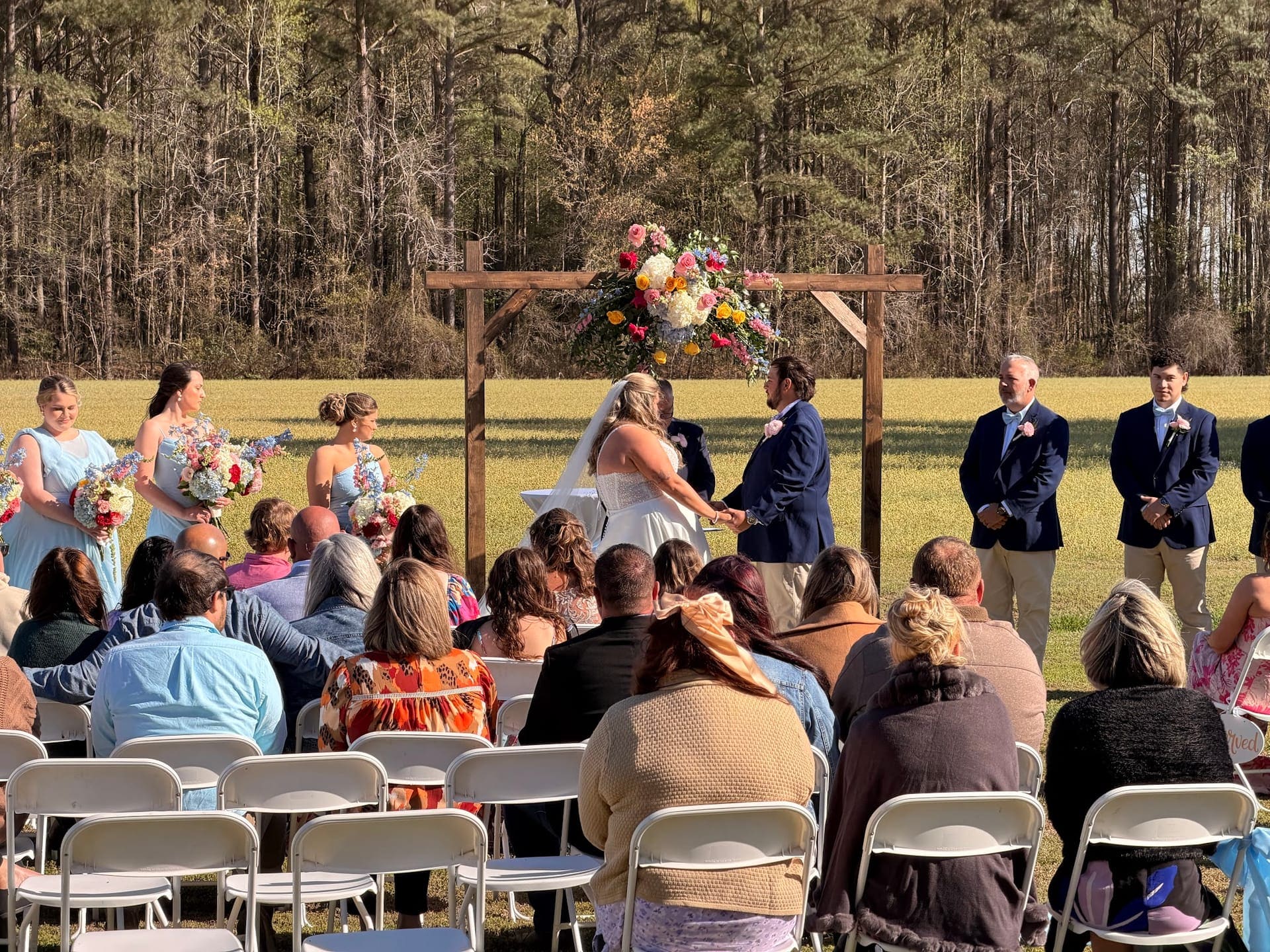
Golden hour weddings work beautifully for this rhythm. Check the exact sunset time for your wedding date and plan your ceremony to finish as the light turns soft and amber. You will have stunning photos and a natural transition into the evening without losing reception time.
If you are planning a winter wedding when sunset arrives early, start even earlier. A 4 PM ceremony in December still gives you the glow of late-afternoon light and positions your reception to run from 5 PM to 11 PM with room for every traditional moment.
Design the Final Hour With Intention
Once you have your start time locked, map the final sixty minutes backward from 11 PM. This is where most timelines go wrong. Couples leave the ending vague and hope it works out.
Here is a structure that honors the close:
10:00 PM: Bouquet and garter toss if you are including them, or an anniversary dance, or any other participatory moment that pulls people back to the floor. This resets energy after the natural mid-reception lull.
10:15 PM: Announce that the final 45 minutes of dancing are beginning. Your DJ can start building the set toward higher energy. Guests who stepped out for air or conversation will return.
10:45 PM: Last call for the bar if you are closing it at 11 PM, or a clear signal that the night is entering its final chapter.
10:50 PM: The last song. Not a slow fade. Not a surprise cut. A planned, announced, everyone-on-the-floor moment. The DJ calls everyone in. You are in the center. This is the image that closes the night.
11:00 PM: Music ends. Guests cheer. You and your new spouse walk out together while your favorite people line the path or toss something sparkly or hold candles. The night has a closing scene instead of a dissolve.
This structure works whether you are hosting 80 guests or 250. It works if your crowd loves to dance or prefers to talk. The key is giving people a roadmap so they can pace themselves and stay present for the final act.
What Happens After 11 PM
The end of amplified music is not the end of the celebration. It is a transition.
If you are staying on-site at Scarborough House with your closest family and friends in the 13 bedrooms that sleep 28 overnight guests in standard bedroom beds, plus one bonus twin for 29 fixed overnight bed spaces guests, the after-party moves indoors. Acoustic music is welcome. Conversation around the fire pit. Late-night snacks in the kitchen. Champagne on the porch. The estate is yours for the entire weekend, and the celebration continues in a quieter register.
Guests who are not staying overnight leave feeling like they were part of a complete event, not a night that trailed off. They remember the intention behind the final song. They remember being gathered together one last time. They do not remember wishing the DJ had played three more songs while standing in an emptying room.
Trust Your Vendors to Build the Arc
A great DJ or band knows how to construct an evening with a defined endpoint. When you hire someone experienced with timed events, they will pace the night so energy peaks in the final hour instead of sagging.
This is part of why we maintain a preferred vendor directory of professionals who have worked at Scarborough House and understand the rhythm of an 11 PM close. They know how to keep the floor full without burning out the crowd by 9:30. They know when to pull back and when to escalate. They know how to make 10:50 PM feel like the peak of the night, not a countdown to curfew.
If you are bringing in a vendor who has not worked at the estate before, share this article with them. Make sure they understand that the ending is not a problem to solve but an opportunity to design. The couples who have the best experiences are the ones whose vendors embrace the timeline instead of resenting it.
Rethink the Myth of the Open-Ended Reception
Wedding culture sometimes sells the idea that a perfect reception has no ending, that the party should go until the last guest collapses. That vision rarely matches reality.
Even at venues with no sound restrictions, most receptions lose steam by 11 PM. Guests with young children leave earlier. Older family members head out after dinner. The dance floor thins. Couples often pay for an extra hour of DJ time that gets used by 30 people instead of 200.
What matters is not the length of the reception. It is the quality of each hour and the feeling guests take home. A five-hour event where every moment feels considered will outlive a seven-hour marathon where the final two hours limp to a close.
According to North Carolina state law, noise ordinances and sound restrictions vary by county and municipality. In our area, we have chosen an 11 PM cutoff that respects both our neighbors and the character of a historic private estate. It has never been a limitation. It has been a gift.
Build the Rest of the Weekend Around the Reception
Thinking about touring? Most couples know within the first ten minutes on the grounds. See tour times or check pricing first.
One advantage of a private estate buyout is that your wedding is not confined to a single evening. The celebration begins when your group arrives and ends when you check out.
Many couples host a welcome gathering on Friday night. Lawn games in the late afternoon. Dinner around the long farm table. Toasts on the porch. By the time Saturday's ceremony begins, your people already feel connected. The reception does not have to carry the entire emotional weight of the weekend.
Sunday morning becomes its own event. Breakfast in the sunroom. Mimosas by the pool (available only to overnight guests staying on the property). Replaying the highlight reel of the night before. When the wedding spans three days, an 11 PM music cutoff on Saturday feels proportional, not limiting.
Browse the real photos of past weddings at the estate to see how couples have used the full weekend. The reception is the centerpiece, but it is not the whole story.
Focus on the Moments That Matter Most to You
Every couple has a short list of non-negotiables. Maybe it is a long first dance. Maybe it is making sure your grandparents get a turn on the floor. Maybe it is a surprise choreographed performance with your siblings.
Write those moments down and give them protected time slots. Build the rest of the timeline around them. When you know your priorities, the 11 PM boundary becomes a focusing tool instead of a constraint.
Use the ceremony seating planner to map out where your most important people will sit during the service, and carry that same intentionality into the reception timeline. The couples who feel most satisfied are the ones who treated their wedding like a designed experience, not a series of vendor obligations.
Let the Estate Setting Shape the Atmosphere
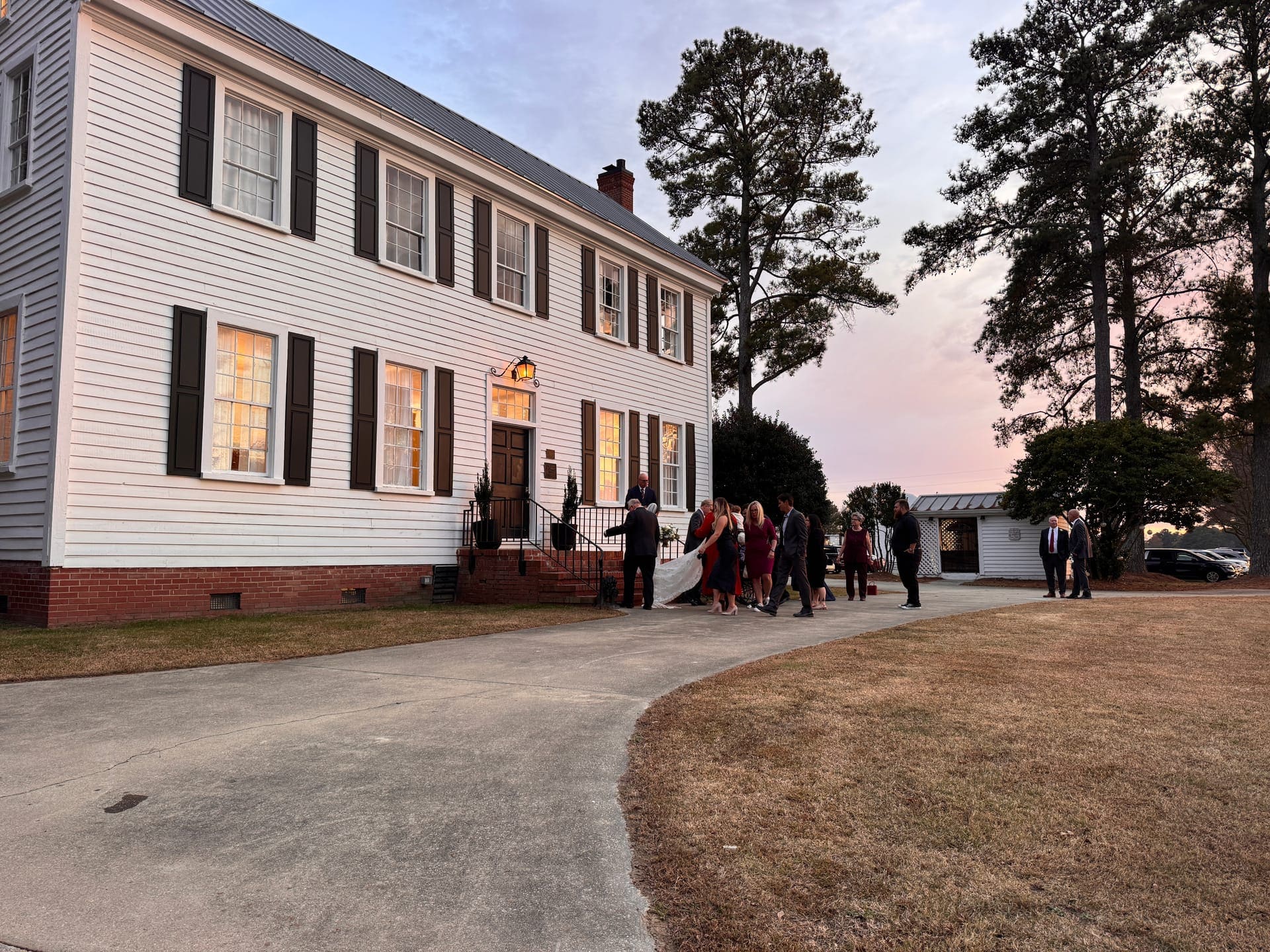
Scarborough House is a 200-year-old estate on the National Historic Register. The architecture speaks before you add a single decoration. Heart-of-longleaf-pine floors. A shaped-rail staircase. Gardens that have been tended for generations. The pole barn with its weathered wood and soft light.
When your venue has this much presence, your reception does not need to scream for attention. The setting creates intimacy. The history creates weight. The surrounding farmland creates quiet. An 11 PM music cutoff feels appropriate to the place. It matches the scale and the spirit.
This is not a ballroom or a convention center. It is a home. Homes have rhythms. They have boundaries. They have neighbors. Respecting that is part of what makes the experience feel grounded instead of transactional.
Plan for the Practical Details That Protect the Timeline
Small logistics can derail even a well-designed timeline. Address them early.
Use the food and drink calculator to make sure you are not running out of appetizers during cocktail hour or causing a bottleneck at the bar. A smooth flow between ceremony and reception keeps you on schedule.
Confirm load-in and load-out times with every vendor. If your caterer needs 90 minutes to break down, make sure that window does not overlap with your after-party or interfere with the quiet hours that begin when music ends.
Communicate the 11 PM cutoff clearly in your vendor contracts and your day-of timeline. Surprises create stress. Clarity creates confidence.
Trust That Your Guests Will Remember the Feeling, Not the Clock
No guest has ever left a wedding saying, "That was perfect, but I wish it had gone until midnight." They remember whether they felt welcomed. Whether the food was good. Whether the couple seemed happy. Whether the night had a shape.
An 11 PM ending gives the night a shape. It creates a beginning, a middle, and an end. It allows you to be present for the close instead of wondering when to pull the plug. It lets your last dance be a decision, not a default.
When you look back at your wedding, you will not wish you had squeezed out another 45 minutes of dance time. You will remember the way the final song felt. The way your people circled around you. The way the night concluded with intention instead of exhaustion.
Start With a Tour
If you are considering Scarborough House for your wedding, the best way to understand how an 11 PM timeline works in practice is to walk the property and picture your day unfolding here. See the gardens where your ceremony will take place. Stand in the pole barn where your reception will come to life. Imagine your closest people waking up in the bedrooms upstairs the morning after.
Book a private tour and bring your questions about timing, sound, and how to design a reception that honors every hour. We will walk you through real examples from couples who have celebrated here and show you how a firm ending became one of the best decisions they made.
The weekend package is $10,500 and includes exclusive use of the entire estate, all 13 bedrooms, and the surrounding grounds. One event at a time. No strangers on the property. Just your people and a celebration designed exactly the way you want it.
Read more wedding planning insights in The Journal, and when you are ready, we would love to show you the estate in person.