
We Bought a Dilapidated 1821 Estate During COVID. Here's What Happened.
Let me set the scene. It's 2020. The world has just locked down. Anthony and I are living in Raleigh in a three-bedroom, two-bathroom house that was perfectly fine when we were never there. About 1,500 square feet. Nothing wrong with it.
Then suddenly your house becomes your office, your gym, your church, your school, and your social life all at once. Anthony Fauci is on TV every other day telling everyone to stay inside and stay six feet away from other people. You can't go anywhere. You can't do anything.
So naturally, we did the opposite.
The Purchase
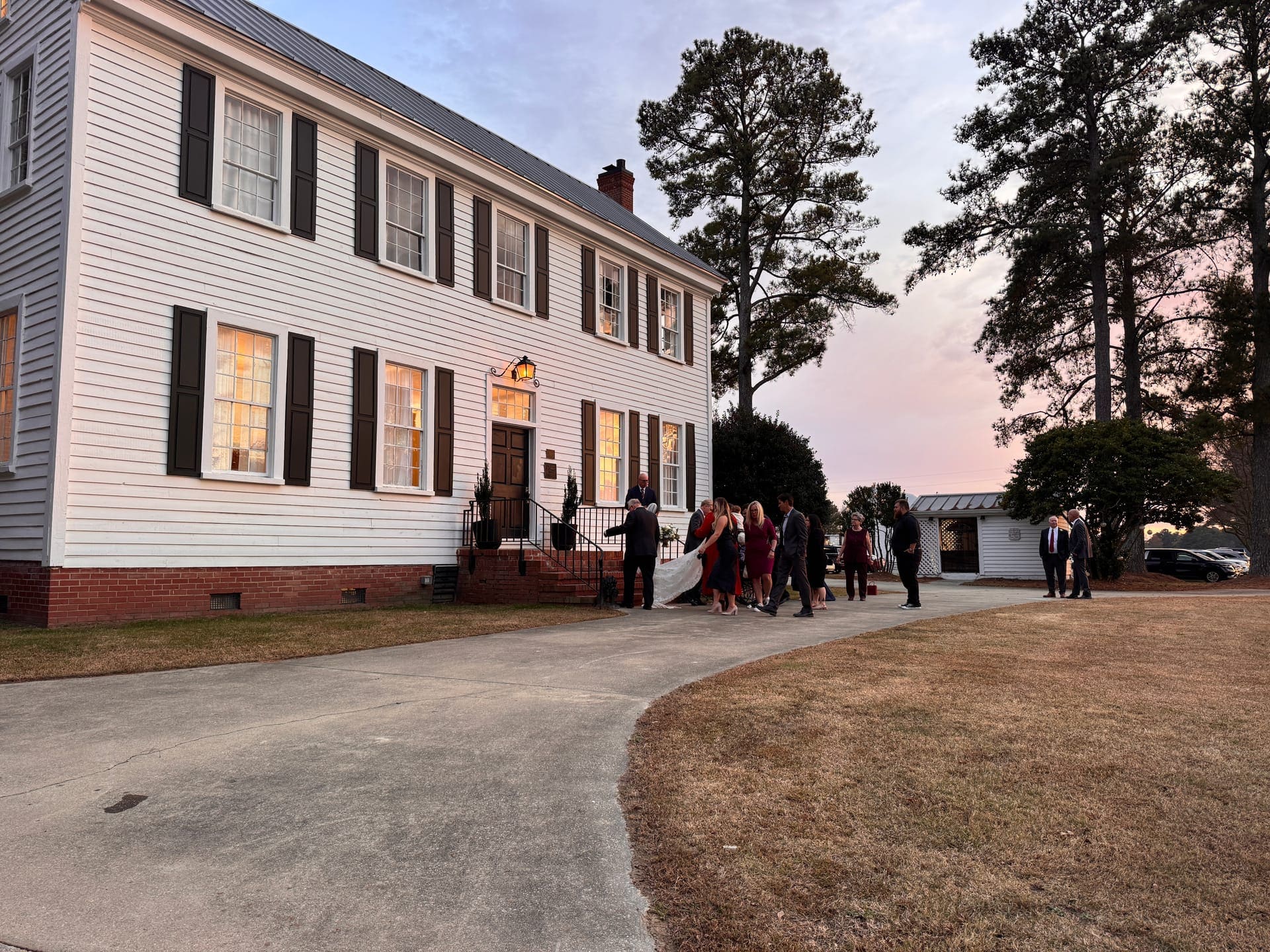
We packed up, moved east to Stantonsburg, and bought a dilapidated old complex on about 10 acres in Wilson County, North Carolina. Nine structures total. The main house is a two-story building originally constructed in 1821, two hundred years old when we bought it.
Sometime in the 1990s, someone had done an ambitious expansion: a guest house, a pool house, an office building, connected pole barns, more barn space, more storage, a gym, and a pool. All of it connected in a sprawling estate that had been sitting mostly untouched for at least a decade by the time we found it.
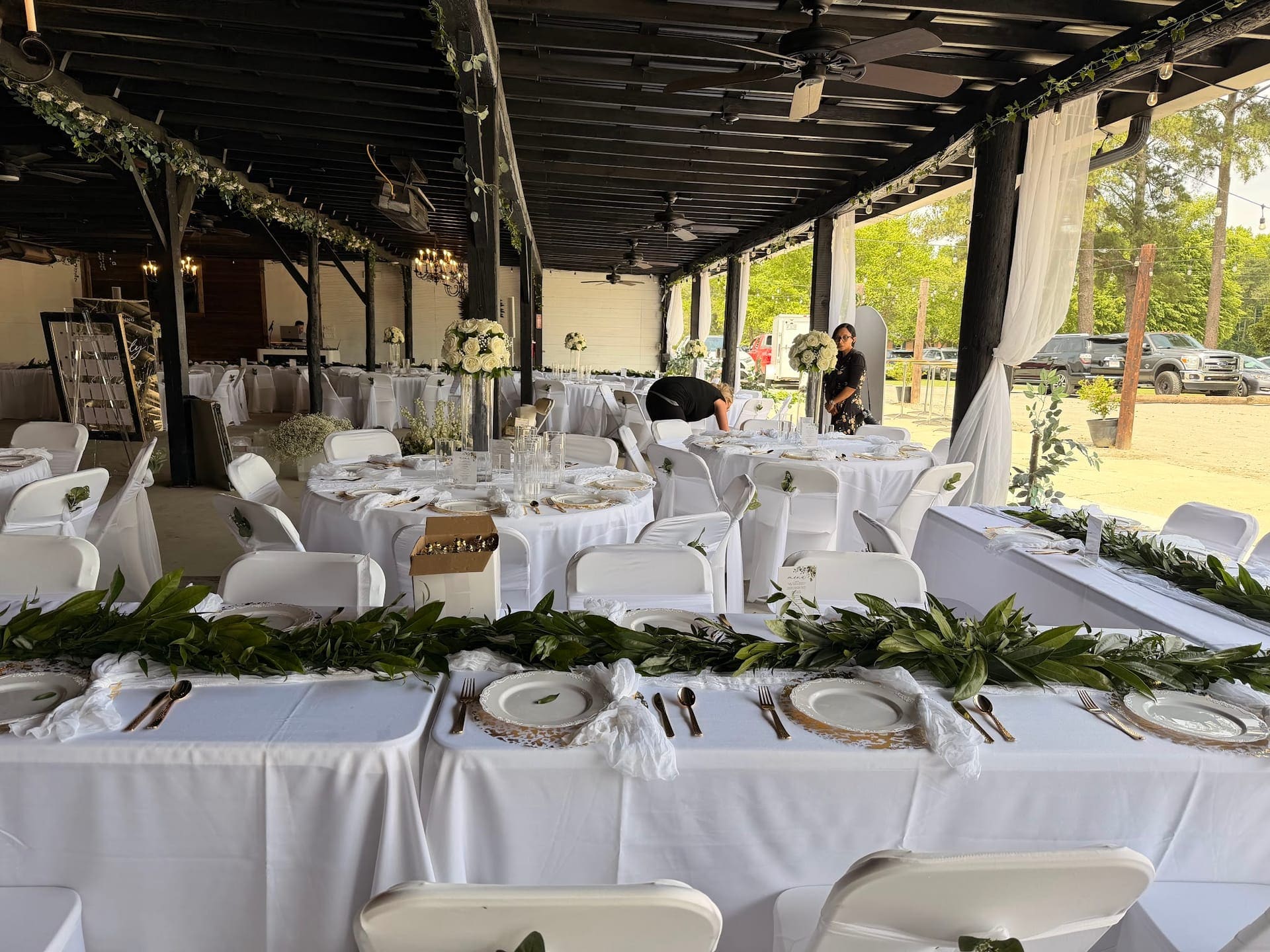
We were not wedding venue people. We had no background in hospitality. No event planning experience. No idea that within a few years we'd be hosting weddings for 150 people on a Saturday night in a pavilion with Edison bulbs and a food truck. We just knew we needed more space, and this was an interesting property at an interesting price.
What We Found When We Got There
The entire property was completely overgrown. Not "lawn needs mowing" overgrown. We're talking about bushes that had been growing unchecked for ten or fifteen years until they were essentially trees blocking the windows. Weeds everywhere. Vines climbing the structures. The kind of overgrowth where you can't see what's actually there until you spend a week just clearing paths.
Under the main house, we found mold. Real mold, not the surface kind. We found places where the floor joists needed additional structural support just to be safe. Several of the structures that were supposed to be air-conditioned had had their units stolen. Pipes had been removed. Light fixtures, chandeliers, hardware that should have been there: gone.
The pool needed a new liner and a new pump. Some of the electrical panels needed replacing. Both of the transformers that connect the property to the power grid had to go. There are three electrical meters and three gas meters on Scarborough House, one for each major section of the estate, and every single system needed attention.
The Numbers
Before we could think about anything else, we had to deal with what was there. We pulled eleven dumpsters of rotten, moldy material out of nine structures. Eleven. Each one was full to the top with subflooring, drywall, insulation, and things that had been slowly disintegrating in the humidity of eastern North Carolina for years.
We replaced all three hot water heaters. We replaced multiple electrical panels. We bought 2,000 gallons of paint and painted the inside and outside of every structure on the property. When parts of your building are four stories high and you're covering 9,000 square feet of living space plus all the outbuildings, 2,000 gallons sounds like a lot until you run out.
We poured roughly a million pounds of concrete: new pads, new paths, structural repairs. We ran about 10 miles of wire for electrical, networking, and lighting. We installed a $12,000 wireless mesh network so every corner of the property has solid Wi-Fi. We got fiber optic brought to the property.
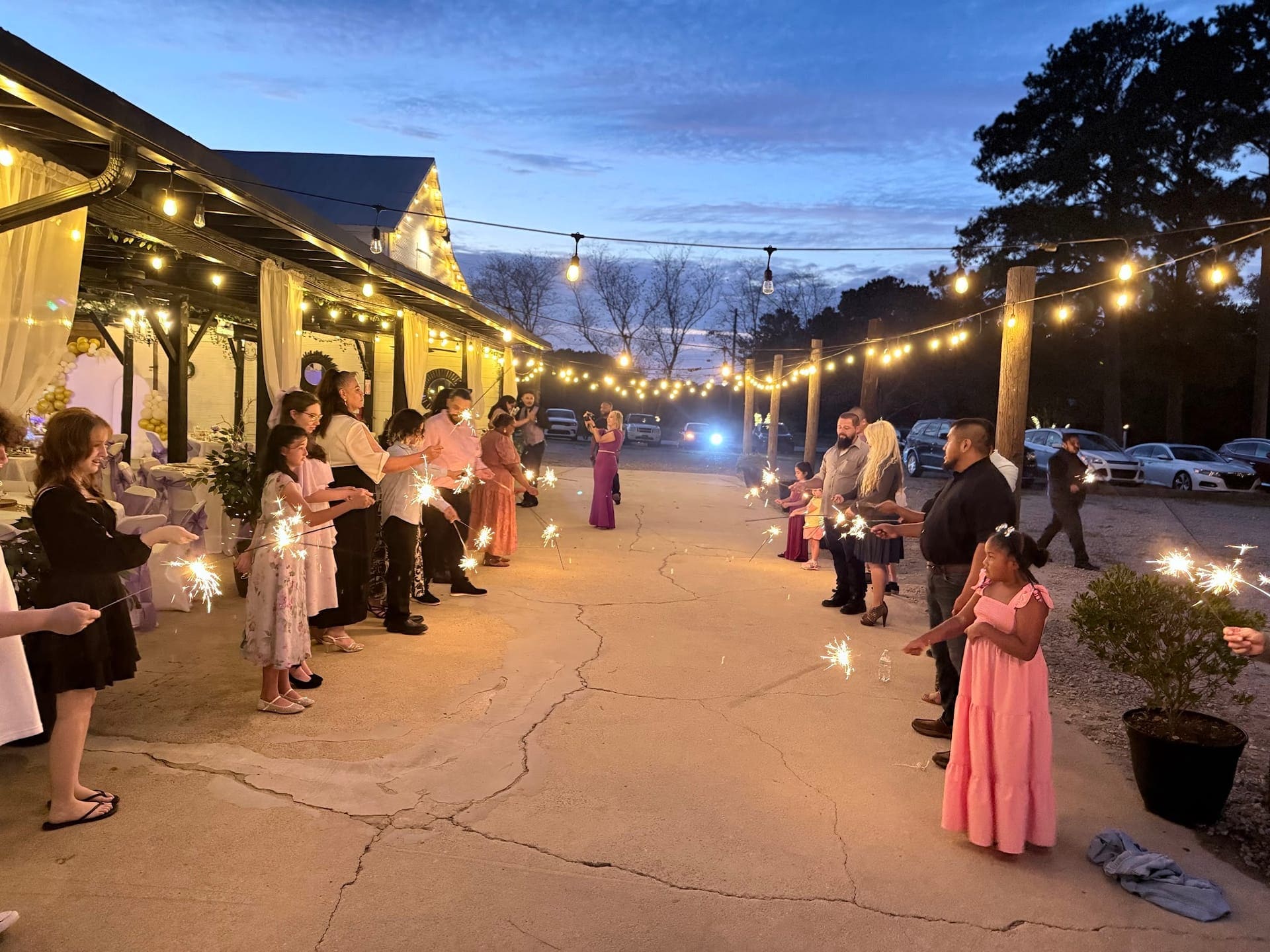
The kitchens got rebuilt. The bathrooms got renovated. The master bathroom got a Jacuzzi tub big enough to actually use. Every single light fixture on the property was swapped to LED. We installed 40,000 Christmas lights across the grounds to create that warm evening glow that photos well, and strung Edison bulbs everywhere else.
Floors got resurfaced with LVP or tile throughout. Most of the doors got work. Every door handle on the property was replaced. Several windows were repaired or replaced outright.
Then We Had to Figure Out What It Was
The physical work was hard, but in some ways it was the straightforward part. Concrete either pours or it doesn't. Wires either connect or they don't. The harder problem was figuring out what Scarborough House was going to be.
We hadn't bought a venue that came with a brand, a reputation, a website, an email list, social media followers, or backlinks. We hadn't bought something that was already generating revenue. We had bought a very large, very old, very restored piece of property in a small town, and we had to decide what to do with it.
The story of how Scarborough House became a wedding venue is for another post. But the short version is: the property is extraordinary, the land is peaceful, and when you have 9,000 square feet of living space and 10 acres of grounds, there aren't that many categories of event that make sense at that scale. Weddings do.
Why This Section of Our Website Exists
Nobody told us any of this going in. Not the scope of what a full estate restoration actually involves, not the timeline (longer than we thought), not the ongoing costs of operating a property with three electrical meters and nine structures. We figured it out as we went.
This section, the Venue Owner's Corner, exists because if you're thinking about buying a venue, you deserve to hear from someone who has done it. Not a broker, not a consultant, not someone selling a course. Someone who has their hands on the thing.
We'll be posting more about what we've learned: the physical work, the legal and zoning side, how we built the business from zero, what the technology looks like, what we'd do differently. If any of it is useful to you, great.
And if you're seriously looking to buy or sell a wedding venue or any kind of hospitality property, use the form on our Venue Owner's Corner page to reach out. We work with brokers who specialize in exactly this, and we're happy to connect people. No blast emails, no published lists. Just a private introduction.
Or call or text me directly: (919) 649-6367. I pick up.
Josh