
The Software Every Wedding Vendor Should Be Using (and What to Skip)
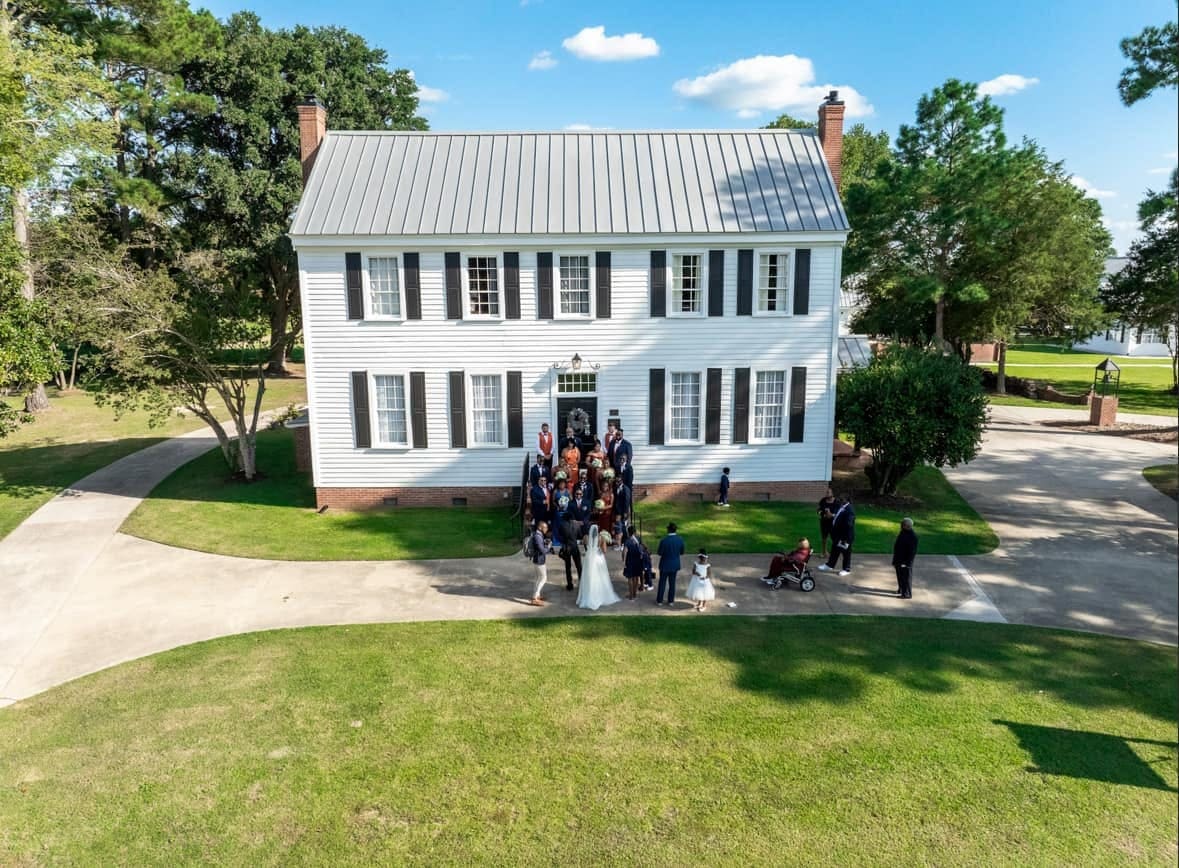
Running Scarborough House has meant becoming familiar with a lot of software. Not because I love evaluating tools, but because the wrong tool at the wrong time costs real money, and the right tool at the right time buys back hours you can spend on things that actually grow the business.
I'm Josh Darville, co-owner of Scarborough House in Wilson, NC. We have worked with dozens of vendor partners who are at every stage of building their business, from part-time operators doing a handful of weddings per year to full-time professionals with multiple staff members. Here is what I have seen work across those different scales.
The category where vendors overpay the most: CRM
A CRM (client relationship manager) is basically a system for tracking who you have talked to, what stage of the booking process they are in, and what needs to happen next. Every wedding vendor needs some version of this. The mistake is paying for a full-featured CRM platform when a well-organized spreadsheet plus a tool like HoneyBook or Dubsado does everything you need.
Both HoneyBook and Dubsado let you send contracts, collect payments, send automated follow-up emails, and track where every inquiry is in your pipeline. For vendors doing under 30 weddings per year, either one is more than enough. The one I see vendors get wrong is paying for the enterprise tier of these platforms when they are not using 30% of the features in the basic tier. Start at the entry level. Add features when you actually need them.
If you are just starting out and do not want to pay for anything yet, a well-structured Google Sheet can handle your inquiry tracking for the first year. The cost of a CRM platform is only worth paying when the manual work of updating the sheet is costing you more time than the subscription costs money.
Contracts: do not skip this, but you do not need a lawyer for every clause
I cannot tell you how many vendors I have talked to who are working without a real contract because "my couples are nice people and I trust them." I respect the optimism. But contracts protect both parties, and a couple who has signed a contract knows exactly what they are getting, which actually reduces conflict rather than creating it.
Both HoneyBook and Dubsado include contract templates you can customize. There are also standalone contract tools like HoneyBook's contract feature, or you can purchase vendor-specific contract templates from sites like CreativeLive for under $50. You do not need a lawyer to draft a custom contract from scratch unless you are doing very large events with complex liability exposure. A good template reviewed by you and adapted to your specific services is a solid starting point.
The most important clauses for vendors: cancellation and rescheduling terms, payment schedule, what is and is not included in the scope, what happens if the vendor cannot perform (illness, emergency), and image/content usage rights if you are a photographer or videographer.
Scheduling tools: the one thing worth paying for
Every vendor who handles inquiries from couples should have a scheduling tool that lets couples book a consultation call directly, without going back and forth on email. This is one of the clearest examples of a tool that pays for itself almost immediately.
Calendly has a free tier that handles basic scheduling. Acuity Scheduling is more powerful and costs around $20/month. Either one is fine for most vendors. The key is that when a couple reaches out and you send them a scheduling link, they can book a 20-minute call in about 30 seconds. Compare that to the typical three-email back-and-forth to find a mutual time, and you have just cut your response-to-consultation friction by 80%.
We talk more about this in our article on speed to lead, but having a scheduling link ready to paste into your initial response email is one of the highest-leverage changes a vendor can make to their booking process.
The one thing most vendors get wrong about their booking flow
Here it is: most vendors treat their booking software as a system for managing couples they have already decided to work with, rather than a system for converting inquiries into bookings in the first place.
Your CRM should have a clear stage for "inquiry received," a stage for "consultation scheduled," a stage for "proposal sent," and a stage for "contract signed." Every inquiry should enter the pipeline the moment it comes in. Every inquiry that goes 48 hours without a next step should be flagged for follow-up. And every inquiry that goes cold should get one more reach-out before you close it out.
Most vendors lose bookings not because the couple chose someone else but because the couple never heard back promptly enough, got confused about next steps, or simply forgot in the rush of planning. A pipeline with clear stages and reminders removes all three of those failure points.
What to skip
Elaborate client portal software that promises to replace email. Social media scheduling tools that you will use for two weeks and then abandon. "All-in-one" business platforms that do 15 things at a 6-out-of-10 level. Paid advertising on directories you have never personally seen convert a booking for another vendor in your market.
The simplest toolkit that you actually use is worth more than the most comprehensive platform that sits unused. Pick one CRM. Pick one contract tool. Pick one scheduling tool. Build your process around those three, get consistent with them, and then add features only when you hit a real limitation.
If you are looking for more ways to grow your wedding business in Eastern NC, start with a free listing in the Scarborough House vendor directory. Apply here.